Recommendations from Serbia




 10 ℃
10 ℃

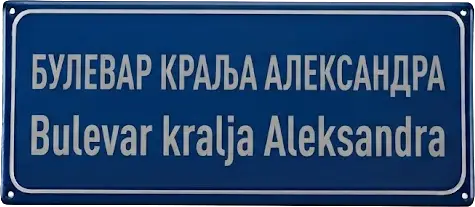
Bulevar kralja Aleksandra
King Alexander Boulevard – History of One of Belgrade's Oldest and Most Significant Streets
King Alexander Boulevard is one of Belgrade's most famous streets, but its story begins long before it acquired its current name and appearance. This thoroughfare, which connects the central part of Belgrade with the eastern parts of the city, has played an important role in the development of the capital for centuries. From a former road leading to Constantinople, through a commercial and craft center, to a modern city thoroughfare, the Boulevard has gone through numerous changes and remained a witness to Belgrade's history.
Today, residential buildings, faculties, markets, shops, and various commercial facilities alternate along it. Yet, behind the daily city hustle and bustle lies a story about the city's development, old street names, and changes that shaped this part of Belgrade.
From Roman Singidunum to the Constantinople Road
The historical significance of the route spanned by King Alexander Boulevard reaches far back into the past. Even in the time of Roman Singidunum, important transport connections existed in the area of present-day Belgrade, linking the settlement with other parts of the Roman Empire. The city's position at the confluence of the Sava and Danube rivers made it a significant crossroads of roads, and the routes leading eastward held a special role in trade and the movement of the population.
During the following centuries, with the development of medieval Belgrade and later under Ottoman rule, the roads connecting the city with the interior of the Balkans continued to hold great importance. One such route was the Constantinople Road, a path leading toward Constantinople, present-day Istanbul.
It is precisely with this old travel route that the history of today's King Alexander Boulevard is connected. Before it became a paved city street, this space lay along the route used by merchants, travelers, and various caravans. Settlements, craft shops, and resting places gradually developed along the road as Belgrade expanded beyond its former city core.
The former Constantinople Road represented a connection between Belgrade and the eastern regions, as well as a symbol of its position among various cultural, commercial, and political influences.
How Did King Alexander Boulevard Get Its Name?
The name of this street changed several times, following the political and social changes through which Belgrade passed. Before becoming known as King Alexander Boulevard, this thoroughfare bore different names, among which Marko's Street and Fišeklija stand out.
The name Fišeklija, or the Gunpowder Bazaar, is associated with former shops selling gunpowder packaged in paper cones. This name recalls a time when crafts and trade developed in this area, and the street had a different appearance from today's. The name Alley by the Golden Cannon is also mentioned, which was linked to a former tavern in this part of the city.
At the end of the 19th century, the street was named after King Alexander I Obrenović, who ruled Serbia from 1889 to 1903. The name King Alexander Boulevard was first used in 1896. It is important to emphasize that this refers to Alexander Obrenović, and not to King Alexander Karađorđević, with whom the street's name is sometimes mistakenly associated.
During the 20th century, the name changed again. In the period after World War II, the street was known as Red Army Boulevard, and later as Revolution Boulevard. These names reflected the political circumstances and changes in the public space of the Yugoslavia of that time.
The name King Alexander Boulevard was restored in 1997. Thus, the street regained the name it bore at the end of the 19th century, thereby restoring part of its historical identity.
The Development of the Boulevard During the 19th and 20th Centuries
During the 19th century, Belgrade gradually moved beyond the boundaries of the old settlement and developed into a modern European capital. The expansion of the city required the regulation of roads, the construction of new residential buildings, and the development of infrastructure. The route of the former Constantinople Road became increasingly significant for connecting the center with settlements forming toward the east.
Trade, craftsmanship, and hospitality developed along the street. The former road gradually acquired the characteristics of an urban thoroughfare, and with the growth of the population, the way this space was used changed. The street no longer served only travelers passing through Belgrade, but became a part of the everyday lives of its residents.
During the first half of the 20th century, Belgrade continued to expand, and the Boulevard took on an increasingly significant role in city traffic. The development of electric tram transport, the construction of new buildings, and the expansion of educational and business facilities changed its appearance. Instead of former commercial shops and modest structures, buildings reflecting the urbanization and modernization of the capital increasingly appeared along the street.
After World War II, the construction of Belgrade continued, and the Boulevard became one of the city's important thoroughfares. New residential blocks, educational institutions, and business facilities developed along it. Its role became increasingly significant as the population grew and the volume of daily traffic increased.
Landmarks That Testify to the Boulevard's History
King Alexander Boulevard and its immediate surroundings encompass several significant city locations that hold an important place in the history and daily life of Belgrade.
At the beginning of the Boulevard, near Nikola Pašić Square, stands the National Assembly House building, one of the most recognizable symbols of Serbia's state history. Its monumental architecture testifies to the development of Belgrade as the political and administrative center of the country.
Not far away is Tašmajdan Park, a space that has changed its purpose and appearance over time, and today represents one of the well-known places for rest and walking in the central part of the city. Nearby are also the Church of Saint Mark and other landmarks that complement the historical picture of this part of the capital.
A special place is occupied by the Vuk Monument, an important traffic and urban hub named after Vuk Stefanović Karadžić, the reformer of the Serbian language. This section of the Boulevard over time developed into a significant educational and business area.
Along the street and in its surroundings are also the faculties of the University of Belgrade, whose development contributed to making this part of the city recognizable for student life. The blend of educational institutions, public spaces, and residential buildings shows how the historical thoroughfare adapted to the new needs of the city.
King Alexander Boulevard Today
Today, King Alexander Boulevard is one of the city's most important streets, approximately 7.5 kilometers long, connecting central Belgrade with the eastern parts of the capital. Its significance is reflected in transportation, education, commerce, and the daily lives of residents who live or work in this part of the city.
Although the appearance of the street has changed significantly compared to the time when it was part of the Constantinople Road, the Boulevard has retained its fundamental role as an important city connection. Tram tracks, busy intersections, residential buildings, and numerous institutions are part of its modern image, while historical names and landmarks recall its long past.
Today, restaurants, traditional taverns, cafes, shops, and various service activities are located along the Boulevard. They form part of contemporary urban life and contribute to making the street, alongside its transport and historical significance, a place for gathering, shopping, and everyday encounters.
On the 011info.com portal, you can explore businesses and venues located on King Alexander Boulevard, find restaurants, cafes, and other services, as well as get acquainted with the offerings of one of Belgrade's most recognizable streets. Its history shows that a city develops not only through major events but also through streets that connect people, settlements, and different epochs across generations.